



Description
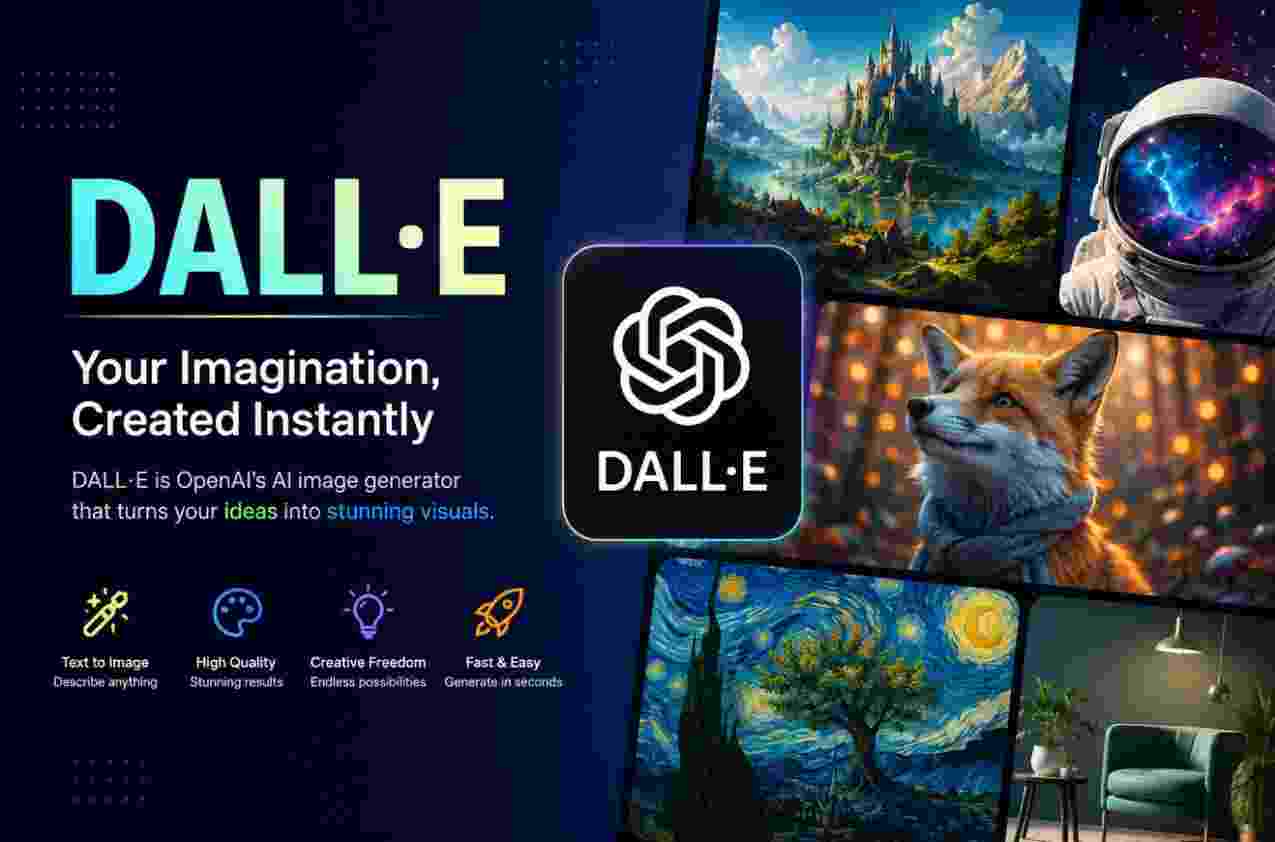
AI image generators have changed how people create graphics, illustrations, marketing visuals, and digital artwork. Among the platforms that helped popularize this technology, DALL·E from OpenAI remains one of the most recognizable names.
DALL·E allows users to turn written descriptions into images. Its most widely known generation, DALL·E 3, significantly improved the ability to understand detailed instructions compared with earlier versions. OpenAI specifically designed DALL·E 3 to follow natural-language descriptions more closely, making it possible for users to create images without becoming expert prompt engineers.
However, there is an important distinction for users researching DALL·E today. DALL·E 3 has been deprecated and removed from OpenAI’s API, with OpenAI recommending GPT Image 2 for current image-generation and editing workflows.
That makes DALL·E particularly interesting from both a historical and practical perspective. It was a major step forward in AI image generation, while newer OpenAI technology now represents the current direction of the platform.
What Is DALL·E?
DALL·E is an artificial intelligence image-generation system developed by OpenAI.
The basic concept is straightforward: you provide a description of something you want to see, and the AI generates an image based on that description.
For example, instead of searching for a stock photograph of a futuristic office, you could describe the scene:
“A modern artificial intelligence laboratory with researchers working alongside humanoid robots, large glass windows, cinematic lighting, realistic photography.”
The AI attempts to translate those words into a visual composition.
The original DALL·E project was introduced by OpenAI in 2021 as a system capable of creating images from natural-language descriptions.
DALL·E 3 later pushed this concept much further by improving prompt interpretation, visual detail, and adherence to user instructions.
How Does DALL·E Work?
DALL·E belongs to the broader category of generative AI systems.
Rather than retrieving an existing photograph from a database in response to a prompt, an image-generation model creates visual content based on patterns learned during training.
DALL·E 3 was specifically developed with improved image-captioning techniques. OpenAI’s research explains that better, more descriptive captions helped the model improve its ability to understand and follow detailed prompts.
This is important because earlier text-to-image systems could easily ignore parts of a long prompt.
For example, if a user requested five specific objects in particular positions, an older model might generate only some of them. DALL·E 3 was designed to pay considerably more attention to the supplied description.
DALL·E 3: The Major Upgrade
DALL·E 3 was a significant improvement over DALL·E 2.
OpenAI highlighted improvements in visual quality, detail, prompt adherence, text rendering, hands, and faces. It was also designed to perform particularly well with longer and more descriptive prompts.
One of its biggest advantages was its integration with ChatGPT.
Instead of forcing users to develop complicated prompts themselves, ChatGPT could help transform a simple idea into a more detailed image-generation instruction.
This made the experience much more conversational.
DALL·E and ChatGPT Integration
The relationship between DALL·E and ChatGPT was one of the platform’s most important advantages.
A user could say something as simple as:
“Create a professional image for an article about remote work.”
ChatGPT could help expand that idea into a more detailed visual concept.
Users could then request changes such as:
- Make the image more realistic
- Change the background
- Add another person
- Make it suitable for a blog
- Use a wider composition
- Make the lighting more dramatic
- Create a more professional version
This conversational workflow reduced the technical barrier traditionally associated with AI image generation. OpenAI specifically described ChatGPT as a brainstorming and prompt-refinement partner for DALL·E 3.
DALL·E Image Quality
DALL·E 3 was capable of producing impressive images across a wide range of subjects.
It worked particularly well for:
- Illustrations
- Concept art
- Editorial graphics
- Business visuals
- Educational images
- Surreal artwork
- Marketing concepts
- Blog graphics
- Social media artwork
- Product concepts
Its strength was not simply producing attractive images. It was its ability to connect the written description with the visual result.
For complicated scenes, this could make DALL·E 3 considerably easier to use than systems that required extensive prompt experimentation.
DALL·E for Blog Images
One of the strongest applications of DALL·E is content marketing.
Bloggers often need a featured image for every article. Finding a relevant stock photograph can take considerable time, and the available image may not perfectly represent the topic.
AI generation provides another approach.
For example, a technology blog could request:
“A modern editorial illustration representing the evolution of artificial intelligence from early computers to autonomous AI systems, clean composition, professional technology magazine aesthetic, landscape format.”
This produces a custom visual concept rather than forcing the blogger to select from existing stock images.
For websites publishing large amounts of content, this can be particularly useful.
DALL·E for Social Media
Social media managers can also use AI-generated images for creative development.
Potential applications include:
- Instagram posts
- Facebook graphics
- LinkedIn visuals
- YouTube thumbnail concepts
- Promotional campaigns
- Event graphics
- Quote artwork
- Product advertisements
- Brand campaign concepts
The biggest benefit is speed.
Instead of commissioning every visual separately, a marketing team can generate multiple concepts and then refine the strongest idea using a professional design application.
DALL·E for Marketing
DALL·E can be useful during different stages of a marketing campaign.
A marketer might use it to develop an initial visual concept before producing the final advertisement.
For example, a company launching a new smartwatch could generate several concepts:
- A futuristic product advertisement
- A lifestyle scene showing the watch being used
- A sports-oriented campaign
- A minimalist luxury advertisement
- A technology-focused product visualization
This makes AI particularly valuable during brainstorming and creative exploration.
DALL·E for Businesses
Small businesses can benefit from AI image generation because they may not have access to an in-house design team.
Potential uses include:
- Website graphics
- Advertising concepts
- Social media content
- Presentation illustrations
- Promotional materials
- Product concepts
- Blog images
- Email marketing visuals
AI doesn’t completely replace professional designers, but it can reduce the cost and time involved in creating initial concepts.
DALL·E Text Generation
One of DALL·E 3’s notable improvements was its ability to generate text within images.
This opened up possibilities for:
- Posters
- Signs
- Greeting cards
- Advertisements
- Product packaging concepts
- Social media graphics
- Illustrations containing labels
However, users should not assume that every generated word will be perfect.
OpenAI’s own research notes that DALL·E 3’s text rendering could still be unreliable, with missing or extra characters occurring in some generated images.
For professional graphics containing important text, it is therefore safer to generate the visual background with AI and add the final typography separately.
DALL·E Creative Styles
DALL·E can generate images using many different visual approaches.
For example:
- Photorealistic
- Cartoon
- Watercolor
- Digital illustration
- 3D artwork
- Editorial illustration
- Vintage poster
- Minimalist design
- Fantasy artwork
- Concept art
- Cinematic imagery
This flexibility makes it useful for people with very different creative requirements.
However, OpenAI also implemented restrictions around requests to generate images in the style of living artists.
DALL·E Safety Features
AI image generation creates legitimate safety concerns, particularly around misinformation, harmful imagery, public figures, and representation.
OpenAI developed multiple safety measures for DALL·E 3, including systems designed to detect and decline certain problematic requests. OpenAI also describes additional safeguards relating to public figures, harmful content, and visual representation.
DALL·E 3 was also designed to reject requests asking for an image in the style of a living artist.
These restrictions can sometimes reduce creative flexibility, but they are an important part of responsible image-generation deployment.
DALL·E Commercial Use
OpenAI stated that images created with DALL·E 3 could be used by users without requiring OpenAI’s permission to reprint, sell, or merchandise those images, subject to applicable terms and policies.
Businesses should still review the current OpenAI terms and applicable laws before relying on AI-generated imagery for important commercial applications.
This is particularly important when an image involves trademarks, recognizable individuals, copyrighted characters, or other protected material.
DALL·E Pricing
DALL·E pricing needs to be considered carefully because the product has evolved.
DALL·E 3 was historically available through ChatGPT and through OpenAI’s API. However, DALL·E 3 is now deprecated and has been removed from the OpenAI API, according to OpenAI’s current developer documentation. OpenAI recommends GPT Image 2 for current image generation and editing.
Therefore, older articles that present DALL·E 3 API pricing as if it were a current product can be misleading.
For users looking for an OpenAI image-generation solution today, the current ChatGPT Images and GPT Image offerings are more relevant.
Is DALL·E Free?
The answer depends on which OpenAI image-generation experience is being discussed.
DALL·E 3 had different access arrangements over its lifetime, while OpenAI’s current ChatGPT image-generation experience has moved toward newer image-generation technology.
OpenAI’s current documentation directs users toward ChatGPT Images for the modern image-generation experience.
For this reason, users should check the current OpenAI plan and image-generation limits rather than relying on old DALL·E pricing articles.
DALL·E vs Midjourney
DALL·E and Midjourney have traditionally appealed to different types of creators.
DALL·E’s major strength: natural-language understanding and conversational creation.
Midjourney’s major strength: highly artistic and visually polished image generation.
For someone who wants to describe an idea naturally and get a useful image without learning complicated prompting techniques, DALL·E was particularly attractive.
For creators primarily interested in artistic aesthetics and highly stylized visuals, Midjourney has traditionally been a strong competitor.
DALL·E vs Adobe Firefly
Adobe Firefly is particularly attractive to users already working within the Adobe ecosystem.
Its integration with professional creative applications makes it useful for designers who need to combine AI generation with traditional editing workflows.
DALL·E’s historical advantage was simplicity.
A user could start with an ordinary sentence and progressively refine the idea through conversation.
Therefore:
DALL·E: better suited to conversational creation and quick visual concepts.
Adobe Firefly: particularly attractive for professional creative workflows within Adobe’s ecosystem.
DALL·E vs Current GPT Image Models
This is the most important comparison for someone evaluating OpenAI’s technology in 2026.
DALL·E 3 is no longer OpenAI’s recommended image-generation model for new API development. OpenAI currently recommends GPT Image 2 for image generation and editing.
OpenAI’s current documentation also describes newer GPT Image technology as offering improvements in instruction following, text rendering, editing, and real-world knowledge.
Therefore, DALL·E is best viewed as an important previous generation of OpenAI’s image technology rather than the company’s leading current API model.
Advantages of DALL·E
Easy to Use
DALL·E 3 was designed around ordinary language rather than requiring advanced prompt-engineering knowledge.
Strong Prompt Understanding
It was particularly good at interpreting detailed descriptions and relationships between objects.
ChatGPT Integration
Users could brainstorm and refine image concepts conversationally.
Wide Range of Applications
It could be used for blogging, marketing, education, social media, concept development, and creative experimentation.
Good General-Purpose Image Generation
It could produce many different types of images without requiring users to specialize in a particular visual category.
Disadvantages of DALL·E
DALL·E 3 Is Deprecated
This is the most important limitation for users considering a new technical implementation. OpenAI has deprecated and removed DALL·E 3 from its API.
Text Can Still Be Incorrect
Generated typography may contain spelling or character errors.
Limited Precision
AI generation does not provide the same level of deterministic control as traditional design software.
Inconsistent Small Details
Hands, objects, geometry, and background elements can occasionally contain mistakes.
Newer Models Are Available
OpenAI’s newer GPT Image models have become the preferred option for current image-generation workflows.
Who Should Use DALL·E?
DALL·E is particularly interesting for:
- Bloggers
- Content creators
- Digital marketers
- Students
- Teachers
- Entrepreneurs
- Social media managers
- Writers
- Website owners
- Designers looking for concepts
Its greatest historical advantage was accessibility.
Someone with no professional design background could describe an idea and quickly obtain a visual interpretation.
Who Should Choose an Alternative?
You should consider other tools if you need:
- Extremely precise design control
- Complex typography
- Advanced image editing
- Consistent characters across a large campaign
- Professional layer-based editing
- A current OpenAI API model
- Specialized artistic workflows
For these requirements, newer OpenAI image models or competing platforms may provide a better solution.
DALL·E Pros and Cons
| Pros | Cons |
|---|---|
| Easy for beginners | DALL·E 3 is deprecated |
| Strong natural-language understanding | Text can contain errors |
| Excellent ChatGPT integration | Limited deterministic control |
| Good general-purpose image generation | Small visual details can be inconsistent |
| Useful for blog images | Newer models are available |
| Supports many visual concepts | Not a replacement for professional design software |
| Useful for marketing | Current API development should use newer models |
Is DALL·E Worth It?
For a completely new project, DALL·E 3 would not be our first choice.
The reason is not that the model suddenly became bad. Rather, AI image generation has progressed rapidly, and OpenAI itself has moved beyond DALL·E 3.
OpenAI’s current developer documentation explicitly identifies DALL·E 3 as deprecated and recommends GPT Image 2 for current image generation and editing.
However, DALL·E remains important because it demonstrated how powerful conversational image generation could be.
Its influence can be seen in the modern workflow of describing an idea, generating an image, evaluating the result, and refining it through natural-language instructions.
Summary
DALL·E was one of the products that helped transform AI image generation from an experimental technology into a practical creative tool.
DALL·E 3’s biggest achievement was not simply producing attractive images. Its real strength was understanding what users meant.
The ability to describe a scene conversationally and have the system interpret detailed instructions made AI image creation accessible to a much wider audience.
For bloggers, marketers, educators, entrepreneurs, and casual creators, this represented a major improvement over earlier text-to-image systems.
However, users should distinguish between DALL·E’s historical importance and its current product status. DALL·E 3 has been deprecated for API use, and OpenAI now recommends newer GPT Image models for current image-generation and editing workflows.
Frequently Asked Questions About DALL·E
What is DALL·E?
DALL·E is OpenAI’s generative AI technology for creating images from text descriptions.
Is DALL·E the same as ChatGPT?
No. ChatGPT is a conversational AI product, while DALL·E is an image-generation technology. DALL·E 3 was deeply integrated with ChatGPT, allowing users to create and refine images through conversation.
Can DALL·E create realistic images?
Yes. DALL·E 3 can generate realistic-looking images as well as illustrations, artwork, concepts, and other visual styles.
Can DALL·E create text in images?
Yes. DALL·E 3 improved text generation within images, although OpenAI’s research notes that the capability could still produce incorrect or missing characters.
Can DALL·E create blog images?
Yes. DALL·E is well suited to creating custom illustrations and featured-image concepts for blog articles.
Can DALL·E images be used commercially?
OpenAI stated that DALL·E 3 users could use generated images for reprinting, selling, and merchandising, subject to applicable terms and policies.
Is DALL·E 3 still available through the API?
DALL·E 3 has been deprecated and removed from the OpenAI API. OpenAI recommends GPT Image 2 for current image-generation and editing applications.
What replaced DALL·E?
OpenAI’s newer GPT Image models represent the current direction of its image-generation technology. OpenAI specifically recommends GPT Image 2 for current image generation and editing.
Is DALL·E still worth learning?
Yes, if you want to understand the evolution of generative AI and how conversational image generation developed. But if your objective is to build a new production workflow, you should learn the current GPT Image tools instead.
Subscribe To Newsletter
Get Daily AI Tools and Softwares Information to Your Email