Description
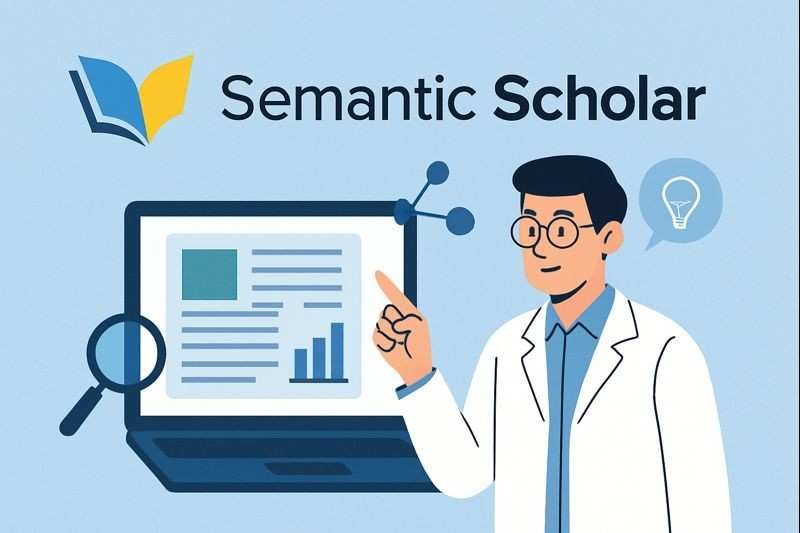
Finding the right research paper is often like searching for a needle in a haystack. With millions of papers published every year, even the most experienced researchers can struggle to keep up. Semantic Scholar was built to fix that problem — using artificial intelligence to make academic discovery faster, smarter, and more relevant.
Let’s explore how this AI-powered academic engine is transforming how we search, read, and understand scientific literature.
What is Semantic Scholar?
Semantic Scholar is a free, AI-driven research discovery platform developed by the Allen Institute for AI (AI2). Unlike traditional databases such as Google Scholar or PubMed, Semantic Scholar goes beyond keyword matching — it uses machine learning and natural language processing (NLP) to understand the meaning behind research papers.
This allows it to surface contextually relevant, high-quality papers while filtering out duplicates, low-impact content, and noise.
In simple terms: it’s not just a research search engine — it’s an intelligent academic assistant that helps you find the right paper faster and understand its impact better.
How Semantic Scholar Works
Semantic Scholar combines AI, metadata, and citation analysis to deliver accurate research recommendations.
Here’s how it works:
-
You search for a topic, author, or paper title.
-
The AI scans its database of over 200 million academic papers.
-
It ranks results based on relevance, influence, and citation context.
-
It also provides summaries, key citations, and topic tags for better understanding.
This approach ensures you’re not just seeing any papers — but the most meaningful and impactful ones.
Key Features of Semantic Scholar
🔍 AI-Powered Search and Filtering
Semantic Scholar understands semantic meaning, not just keywords. For example, if you search “machine learning for medical imaging,” it identifies papers conceptually related to the query, even if they don’t contain the exact words.
📑 Smart Summaries (TL;DR Section)
Each paper includes an AI-generated summary that condenses the main idea into a few lines — perfect for quickly scanning large volumes of research.
🧠 Citation Graphs and Influence Mapping
The platform visualizes citation relationships — showing which papers influenced a study and how the topic has evolved over time. This helps researchers identify seminal works and key trends in any domain.
📈 Author Profiles and Metrics
Every author has a detailed profile with metrics like citation count, h-index, and co-author network, giving a clear view of their research influence and collaboration scope.
📚 Paper Recommendations
Semantic Scholar’s algorithm suggests related and trending papers based on what you’re reading — ideal for literature reviews or exploring new research areas.
⚙️ Filters and Sorting Options
You can filter results by year, journal, field, or publication type, and sort by relevance, recency, or citation count, offering full control over your discovery process.
Benefits of Using Semantic Scholar
-
Saves research time with AI-powered relevance ranking
-
Improves comprehension with short summaries and key phrase highlights
-
Simplifies literature review by showing paper connections and influence
-
Offers reliable, peer-reviewed sources
-
Free and easy to use for anyone, from students to professionals
Who Should Use Semantic Scholar?
-
🎓 Students: For finding references, understanding topics, and writing academic papers.
-
🔬 Researchers: For staying updated on emerging studies and influential work.
-
👩🏫 Professors and Educators: For teaching and citation tracking.
-
💼 Industry Professionals: For keeping up with academic research relevant to innovation and product development.
Pros and Cons of Semantic Scholar
Pros:
✅ AI-driven, context-aware search results
✅ Fast and intuitive interface
✅ Free access to millions of papers
✅ Detailed author and citation insights
✅ Excellent paper summaries (TL;DRs)
Cons:
❌ Not all journals or fields are fully indexed
❌ Some PDFs are linked externally (not hosted)
❌ No built-in citation export to reference managers
❌ Limited personalization features compared to tools like ResearchRabbit
Semantic Scholar vs. Google Scholar vs. Scite.ai
While Google Scholar is a broad academic search tool, Semantic Scholar is more refined — it understands meaning, not just matches keywords.
Compared to Scite.ai, which focuses on citation verification (supporting, contradicting, or mentioning), Semantic Scholar offers a broader discovery and exploration experience, especially for early-stage literature searches.
In short:
-
Google Scholar → Quantity
-
Scite.ai → Citation integrity
-
Semantic Scholar → Smart, meaningful discovery
Pricing and Accessibility
One of Semantic Scholar’s greatest strengths is its completely free access. You don’t need subscriptions or institutional logins — simply visit semanticscholar.org, search your topic, and start exploring.
It’s accessible on any modern browser and optimized for desktop and mobile use.
User Experience and Interface
Semantic Scholar’s interface is clean, fast, and research-focused. The layout displays summaries, references, and related papers neatly on one page — reducing clicks and distractions.
Its design feels professional yet simple, making it approachable for beginners and efficient for experts.
Is Semantic Scholar Worth Using?
Absolutely — it’s a must-have for every researcher.
Semantic Scholar stands out as one of the most intelligent and reliable academic search engines available today. It combines the depth of traditional databases with the intelligence of modern AI, making research faster, smarter, and more accessible.
Whether you’re conducting a literature review, exploring new fields, or tracking citations, Semantic Scholar simplifies the process without sacrificing quality.








Reviews
There are no reviews yet.